Needs Must happen
Living expenses, retirement income, tuition, the down payment. Matched with high-quality bonds timed to when you'll need them, so one bad market year can't derail them.
Financial planning for what's nextLiability-driven wealth management
Clear, honest advice for every stage of life. We set aside high-quality bonds for the goals you can't miss, then invest the rest for long-term growth. We price your goals like liabilities, secure what must happen, and invest only your true surplus for growth. The same method pension funds and family offices use.
Our approach
01
Your career, your family, the home you want, the trips you keep putting off. The plan starts there, not with a product.
Your career, home, Social Security, and equity compensation are assets and obligations too. The plan accounts for all of them, not just your accounts.
02
Every recommendation comes with the why, in plain English. If something is unclear, that is on us to fix.
Every goal becomes a stream of future cash flows with a present-day cost, measured at market interest rates instead of assumed returns.
03
Life changes, so your plan does too. We check in regularly and adjust before small things become big ones.
How much risk to take comes from your surplus over what your needs cost, not from a questionnaire about how you feel.
How we investHow we invest · the full method
Most portfolios start with a risk questionnaire and a guess about future returns. We start with what your money has to do, and when.
Liability-driven investing is how pension funds and endowments manage money, and it works just as well for individuals and families. Play with the numbers first, then walk through the logic.
Living expenses, retirement income, tuition, the down payment. Matched with high-quality bonds timed to when you'll need them, so one bad market year can't derail them.
Travel, an earlier retirement, the upgrades. A balanced mix with time to recover from a downturn.
Legacy, giving, the dream property. Invested for long-term growth, because this money has decades to work.
Try it
Illustrative mixes to show the idea, not a recommendation.
Your total wealth
A questionnaire measures how you feel about risk on the day you fill it out. Monte Carlo simulations depend on return assumptions no one can know. Matching your money to your real obligations means the plan holds up without needing a forecast to be right.
Pension funds and family offices for the ultra-wealthy rely on this same strategy: secure the money that has to be there, then invest the rest for growth. You get that same discipline, whatever stage of life you're in.
No strategy eliminates risk. Matching investments to goals can reduce, but not remove, the chance of falling short.
Try it
TIPS yields from the U.S. Treasury.
Cost to secure this goal today
Funded ratio
Illustrative math: the present value of level annual spending at one real rate. A real plan uses a full yield curve and every goal you have. TIPS yields: U.S. Department of the Treasury, daily real yield curve.
01
Traditional planning looks at your investment accounts and asks how much risk you can stomach. We start with your whole economic balance sheet, the way an institution would: everything you have, including the present value of your future earnings, and everything you owe your future self.
Early in a career, human capital usually dwarfs the portfolio. Later, Social Security and pensions carry more of the load. Leave either out and a plan ends up quietly wrong.
02
Each goal is a stream of future cash flows: $90,000 a year in retirement, $160,000 for a down payment in four years, tuition starting in 2040. We discount those cash flows to today using market interest rates: a Treasury zero-coupon yield curve, and TIPS for goals that rise with inflation.
That gives every goal a real, present-day cost instead of a guess.
03
Funded ratio = resources you can count on ÷ present value of your goals
Above 100% on your needs means they're covered even if markets disappoint. Everything above that is your surplus, and the surplus, not a questionnaire, sets how much investment risk makes sense. Try it in the calculator above.
Short of needs: save more, adjust a goal, or take risk on purpose.
Needs secured, whatever markets do.
A 40% surplus that can afford real market risk.
04
Money for needs is invested to match the timing and inflation sensitivity of those goals: bond ladders and duration-matched Treasuries and TIPS, so assets and liabilities move together when rates change. Wants get a balanced mix. The surplus, for wishes and legacy, is invested for long-term growth in a diversified, low-cost equity portfolio.
Your overall stock and bond mix becomes an output of your goals, not an input.
05
Your liquid investments should fill the gaps in the rest of your balance sheet. A tenured teacher's career behaves like a bond, so their portfolio can lean toward growth. A tech employee paid in RSUs already carries a big, concentrated equity bet in their paycheck and their stock, so their portfolio should diversify away from it.
Same age, same risk score, very different right answers.
06
The plan's output goes deeper than a stock-and-bond split. It's a set of target exposures to the factors that drive returns: the overall market, company size, value, and on the bond side, interest-rate and credit risk. How long each dollar has to work decides how hard we lean on each one.
Money with a long runway leans toward small-cap and value stocks and adds credit on the bond side, where patient investors have historically earned higher returns for sitting through long dry spells. As a goal gets closer, its growth money moves to a globally diversified core equity portfolio that stays close to the market, so one factor's bad decade can't derail a near-term goal.
A few years awayStay close to the market
5 to 15 yearsA moderate tilt
15 years or moreThe fullest tilt
Global core equitySmall-cap tiltValue tiltTreasuries & TIPSCredit
07
Value companies are cheap for a reason, and small companies are fragile in ways big ones aren't. Investors demand a discount for owning that risk, and the lower price is what raises the expected return. Because it's payment for risk, it can take years to show up.
The research: Nobel laureate Eugene Fama and Kenneth French showed that small and value stocks share common risks diversification can't remove, and that value companies tend to have persistently weaker earnings. Their data goes back to 1926.
How often the premium showed up
1 year
5 years
10 years
20 years
Small beat largeValue beat growth50%, a coin flip
08
Once the plan sets the targets, we choose the lowest-cost, most tax-efficient way to own each one. The plan picks the tools, not a product shelf.
That might be an ETF in one account and a mutual fund in another, a separately managed account where owning individual securities helps at tax time, or private assets when the time horizon and your eligibility allow.
Low-cost and tax-efficient. The workhorse for most taxable accounts.
Most accountsPrecise factor exposure, often the best fit inside IRAs and 401(k)s.
Retirement accountsYou own the stocks or bonds directly, which opens up tax-loss harvesting and customization.
Larger taxable accountsPrivate credit, real estate, or private equity, used sparingly and only for long-horizon money. The next step explains why.
Eligible investors only09
In our view, most alternatives no longer add real diversification or excess return. After higher fees, extra taxes, and years of locked-up money, investors often come out behind.
We see two exceptions: a truly diversifying alternative, and backing something, or someone, you care about, sized from the surplus so the plan never depends on it. After all, getting joy from what you invest in is the whole point.
Stock- and bond-like risk with higher fees, extra taxes, and years of lock-up.
Usually a passReturns from a source stocks and bonds don't capture.
Worth a lookA friend's startup or a venture you believe in, funded from the surplus.
From the surplus10
Where it makes sense, we try to hold each investment in the type of account where it's likely to be taxed least, an approach called asset location. It can't always be perfect, though. Keeping some bonds in both taxable and retirement accounts can make rebalancing easier and keep money within reach when you need it, so we weigh the tax savings against that flexibility.
Then we rebalance with a light touch. New contributions, withdrawals, and dividends do most of the work, and we trade only when a holding drifts outside its band, with an eye on taxes when we do. Fewer trades, fewer realized gains.
Taxable account
IRA / 401(k)
Roth IRA
Low-turnover rebalancing
Inside the band: no tradeOutside: rebalance, with taxes in mind
General guidelines, not a recommendation. Your tax brackets, account balances, and goals decide the details.
11
Some of the biggest threats to a plan aren't market risks at all. They're handled directly, with the right tool for each, so the portfolio doesn't have to carry them.
12
A Monte Carlo simulation runs thousands of hypothetical markets using assumed returns and volatility, then reports a "probability of success." Small changes to those assumptions swing the answer dramatically, and the number says little about what happens in the scenarios that fail.
Funded-ratio planning uses today's market prices instead of forecasts, so the plan is anchored to something observable.
13
Interest rates, markets, and your life all move. When rates rise, the present value of your goals falls and your funded ratio improves. When you get a raise, have a child, or buy a home, the balance sheet changes.
We re-measure regularly and rebalance toward the plan, locking in progress as goals become fully funded.
Liability-driven investing is how pension funds and endowments manage money, and family offices bring the same discipline to the ultra-wealthy. Our factor tilts come from decades of research led by Nobel laureate Eugene Fama and Kenneth French. We apply both to individuals and families at every stage of life.
Libretto publishes articles, webinars, and podcasts on total-wealth planning, human capital, and risk management.
Ken French still publishes the factor data behind this research, free, with U.S. returns back to 1926.
Dollar figures and percentages above are illustrative examples, not projections for any client. Hedging reduces, but does not eliminate, the risk of falling short. Factor premiums have varied widely and have been negative for long stretches, and past performance does not guarantee future results. Views on alternative investments are our opinion and won't fit every situation.
Services
Cash flow, savings goals, and a clear picture of how today's choices shape the next ten years.
A full economic balance sheet, including human capital, Social Security, and equity compensation, with every goal priced in today's dollars.
Diversified, low-cost portfolios built around your goals, not a risk score.
Treasury and TIPS ladders for needs, and a low-cost growth portfolio for the surplus, tilted by time horizon and rebalanced to your funded status.
RSUs, ESPPs, and stock options, with a plan for when to hold, when to sell, and what it means at tax time.
Staged diversification of employer stock, ISO and ESPP timing, asset location, and tax-loss harvesting.
Buying or downsizing a home, paying down debt, changing jobs, or retiring. Run the numbers before you commit.
Mortgage versus investing, rent versus buy, career moves, and retirement timing, each measured by its effect on your funded ratio.
529 plans for kids or grandkids, help for aging parents, and gifts to family, without losing sight of your own goals.
Tuition priced and hedged like any other goal, with 529 funding coordinated across the whole plan.
Insurance, beneficiaries, and the basic estate documents every family needs, coordinated with your attorney.
Disability and life coverage sized to your human capital, reserves for job risk, and estate documents coordinated with your attorney.
How it works
A free 20-minute conversation to see whether we're a good fit.
Aggregate every account, then value human capital, Social Security, and equity compensation.
We learn your goals, your numbers, and what keeps you up at night.
Build a cash-flow schedule for every goal and discount it on Treasury and TIPS curves.
A clear written plan with priorities, trade-offs, and next steps.
Hedge the needs, size the surplus, and build a completion portfolio around the rest of your balance sheet.
Regular check-ins, a quarterly report you can actually read, and a call whenever life changes.
Track your funded ratio as rates, markets, and life change, with a clear quarterly report.
Safety
We never hold your money. It sits at Charles Schwab, the largest custodian for independent advisors in the U.S., in accounts opened in your name.
Your accounts are opened in your name at Charles Schwab. We can manage your investments and deduct the fee you agree to, but we can't take your money for ourselves.
Assets sit with an independent qualified custodian, in accounts registered to you. Our access comes through a limited power of attorney you sign: we can trade and deduct the agreed fee, but we can't take your money for ourselves.
More than 16,000 independent advisory firms keep their clients' money at Schwab, about $5.5 trillion in all. You're in good company.
Schwab custodies about $5.5 trillion for more than 16,000 independent RIA firms. That scale pays for security, operations, and oversight no small firm could build on its own.
Statements and trade confirmations come straight from Schwab, not from us. Log in to Schwab Alliance anytime to see every holding and transaction.
Statements, confirmations, and tax forms come directly from the custodian, so every report we send can be checked against Schwab's records at Schwab Alliance.
Your Schwab login is protected by two-step verification: a quick approval in the Schwab app or a one-time code, on top of your password. We use two-factor authentication on every system that holds your information, too.
Schwab Alliance uses two-step verification, by app approval or one-time code, and you can require it at every login. Internally, every system that holds client data requires multi-factor authentication.
Schwab is a member of SIPC, which protects securities customers up to $500,000, including $250,000 in cash, if a member firm fails. SIPC doesn't cover market losses.
Your money never depends on me. Your accounts stay in your name at Schwab, you keep full access, and you're free to pick a new advisor or manage them yourself.
Because the custodian holds your assets in your name, nothing about your accounts changes if I can't serve. You keep full access through Schwab and can move to another advisor or manage the accounts directly.
Ranking: #1 in RIA custodial assets, The Cerulli Report, RIA Marketplace 2025, as cited by Schwab. Firm count and assets as reported by Schwab, mid‑2026. SIPC coverage details at sipc.org. Cedar and Current is independent of and not affiliated with Charles Schwab & Co., Inc.
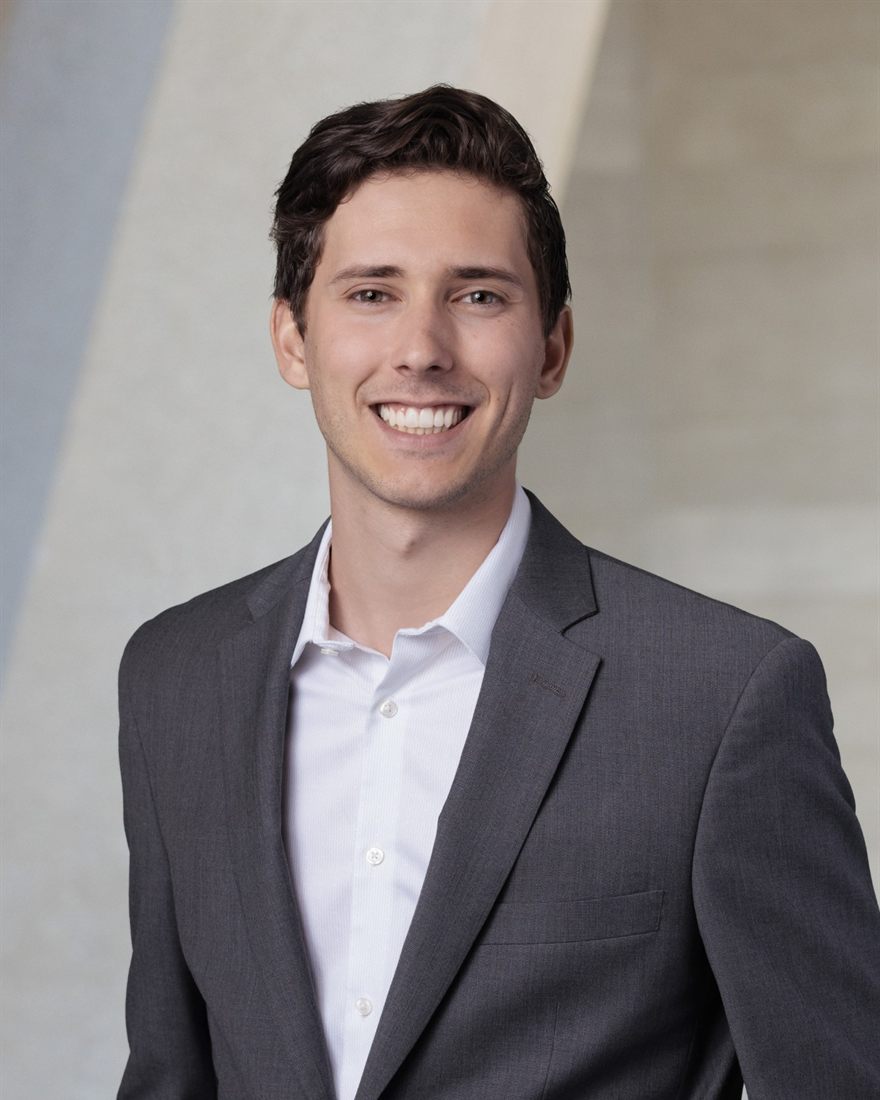
About
I'm a CFP® professional and a self-described financial planning nerd. I started Cedar and Current to bring the kind of planning usually reserved for the ultra-wealthy to people at every stage of life.
Before starting the firm, I spent years as a client advisor at a Seattle multi-family office, leading financial planning and working with families on everything from equity compensation to estate plans.
Outside of work you'll find me sailing, skiing, or planning the next trip up the coast.
Let's talkLet's run the numbers
A free, no-pressure 20-minute call. Bring your questions; leave with a clearer picture.Book a call and we'll price your goals together, using your real balance sheet.